Lähde:MUCIN as a potential biomarkers for early detection of cancers. doi:10.3390/cancers15061640
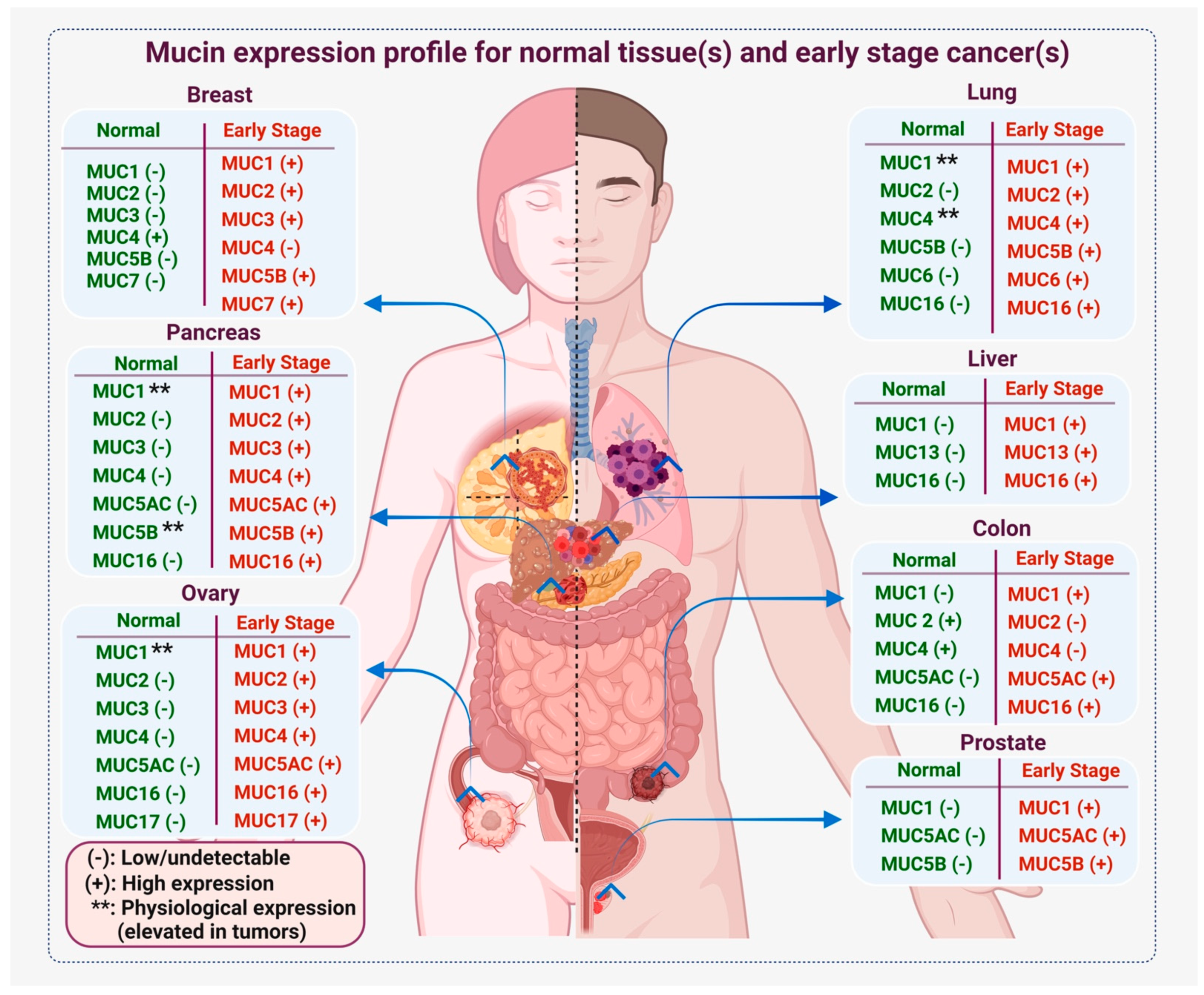
Mucin expression profile in human malignances. Mucin highly deregulatedi n major human cancers.
Mucins as Potential Biomarkers for Early Detection of Cancer
Mucins as Potential Biomarkers for Early Detection of Cancer
by  ,, and
Shailendra K. Gautam
1,†,Parvez Khan
1,†,Gopalakrishnan Natarajan
1,Pranita Atri
1,Abhijit Aithal
1,Apar K. Ganti
2,3,Surinder K. Batra
1,2,Mohd W. Nasser
1,2,* andManeesh Jain
1,2,*1
Department of Biochemistry and Molecular Biology, University of Nebraska Medical Center, Omaha, NE 68198, USA
2
Fred & Pamela Buffett Cancer Center, Eppley Institute for Research in Cancer and Allied Diseases, University of Nebraska Medical Center, Omaha, NE 68198, USA
3
Division of Oncology-Hematology, Department of Internal Medicine, VA Nebraska Western Iowa Health Care System, University of Nebraska Medical Center, Omaha, NE 68105, USA
*
Authors to whom correspondence should be addressed.
†
These authors contributed equally to this work.
Cancers 2023, 15(6), 1640; https://doi.org/10.3390/cancers15061640
Submission received: 1 February 2023 / Revised: 25 February 2023 / Accepted: 27 February 2023 / Published: 7 March 2023
(This article belongs to the Collection Cancer Biomarkers)
Simple Summary
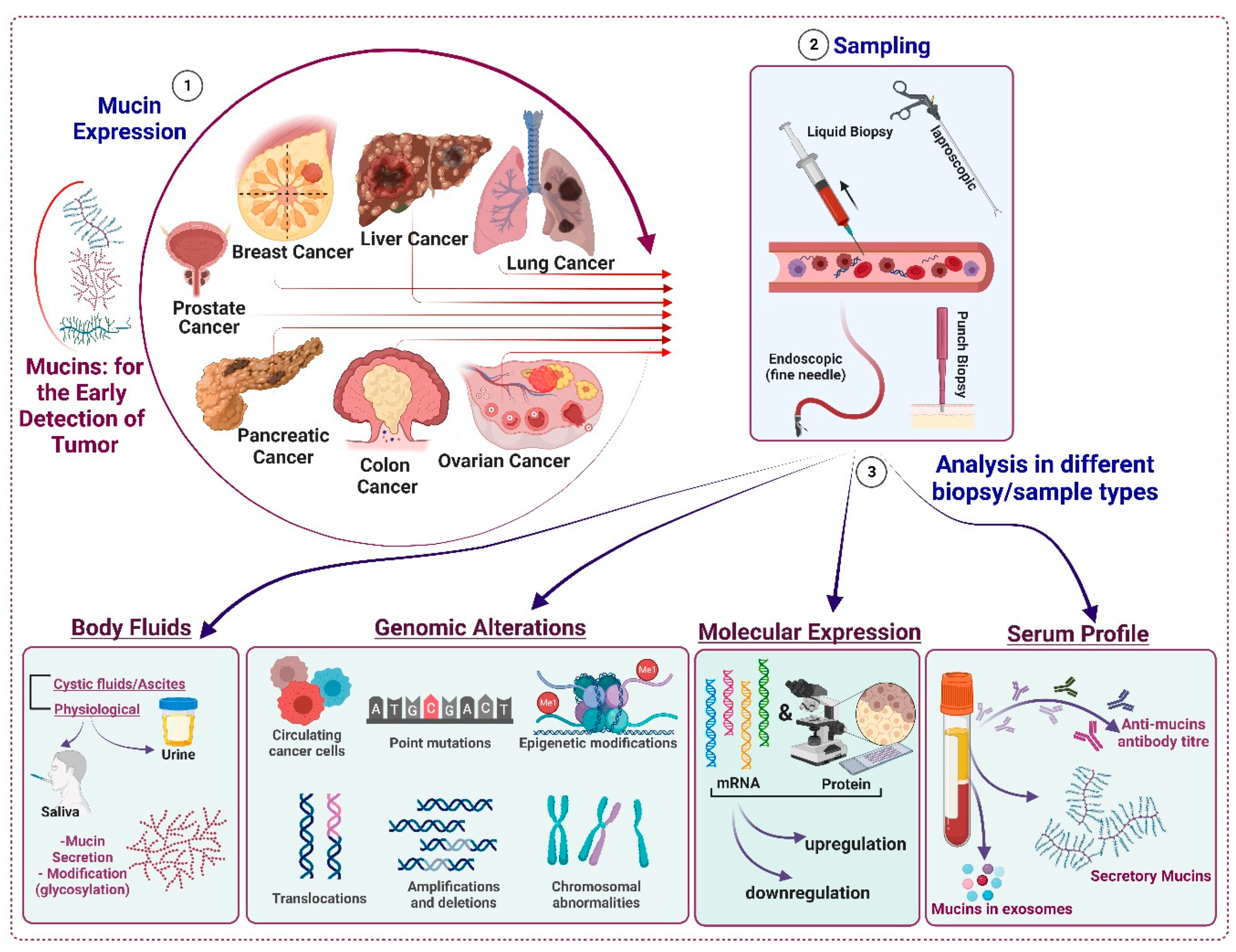
Early cancer detection is a challenge in treating cancer patients. Remarkably, carcinomas of the breast, lung, liver, pancreas, ovary, and colon contribute to more than 50% of total incidences and mortality annually, which could be reduced by early detection. As mucins are highly upregulated during the early progression of these cancers, several studies have explored mucins as potential biomarkers. Due to their membrane-bound and secretory nature, mucins have been detected in tumor biopsies and liquid biopsies of cancer patients, including blood and urine samples. We compiled here previous studies advocating for the use of mucins as potential biomarkers for the early detection of cancer and discuss the opportunities and challenges related to the use of mucin biomarkers in combination with other biomarkers and detection modalities.

Inga kommentarer:
Skicka en kommentar