Etiketter

Summa sidvisningar

Leta i den här bloggen

tisdag 27 september 2022

Valaiseva artikkeli hexosaminitien preijauksesta sivutietä, ehkä myös Covid-19 infektiossa. "IRF-kingdom"

Eräs kuva, jossa on IRF-5. 
 

https://www.ncbi.nlm.nih.gov/pmc/articles/PMC1251617/ 

Hexosaminitien  vääriltä raiteilta  muodostunee niitä  erittäin  vaikeaa koronapandemiaa sairastavien keuhkoja tukkivat hyytelöt ja nesteet . Samalla kun päätie glykolyyttiseen energian luomiseen  ohittuu,  estyy myös  glutamiinin palautuminen  aminotyppirikkauteensa. Siis mikään aminohappo ei ota irtoavaa vastaan deaminaation  ammoniumia.   Korkeassa pitoisuudessa ammonium  edistää   fruktoosi-6-fosfaatin isomeroitumisia ja myös       heksosaminimuodon  syntyä. Tässä   ei ole  glutamiinisyntetaasia.  Näin on  käynnissä  jokin  devioitunut tie kohti UDP-GlucNAc  (josta on myös  mm  hyaluronihappoon ym produktiin  johtava reitti)  ja siinä tiessä    sitä metabolinen  flux  fruktoosi-6-fosfaatin ja  kertyvän  ammoniumin suhteen.   ( Fysiologisesti HBP tietä    esiintyy embryon ja munasolun   kehityksessä.) Kuitenkaan tien aktivaatio  viruksesta  ei ehkä  kaikilla   positiivisilla  tee keuhkoon näkyvää tai tuntuvaa   muutosta. Voi ajatella, että  tämä heksosaminisynteesitien ylipaisuminen   ei ole edes viruksen säädeltävissä sitten kun se on alkanut sytokiinimyrskyssä .   Arveltavaa on, että virus haluaisi vääntää  glukoosiaineenvaihdunnan pentoositielle replikaation edistämiseksi ja muutenkin  aminohappojen ja nukleotidien   synteesiin  kiivaassa translaatiossaan.  Tietysti se tarvitsee energia-aineitakin.  Tietysti  tuollainen alkionaalinen geelinen  miljöö voi olla  viruksen ohjelmalle kuitenkin suojaa antava, vaikkei  varsinainen rakennusaine.  Post-covid -vaiheessa vain tulee mieleen, että  taitaa olla monilla merkkejä keuhkossaan sars-2 infektion käymisestä, mutta sille tyyppillistä taudinkuvaa tai  post-infektiöösiä keuhkostatusta ei kaiketi ole vielä  yleisesti luokiteltu. Akuutit muutokset ovat olleet  vaikea-asteisessa taudissa  suorastaan  harvinaisen pahoja ja ihmetystä herättäviä. .   Täytyy selata, jos löytyy netistä jälkitaudista   yleisesti   luokiteltavia muutoksia. Yleisiin keuhkokuvauksiin ei maailman resurssit ja voimat  mitenkään  koostu vielä. Tässä ihmiskunnan helpotuksen huokauksen ja lepovaiheen  hiljaisessa latenssissa voi kuitenkin tapahtua  koko ajan eteneviä keuhkomuutoksia kuten fibroosia tai  solutason  priorisoitumista  pahanlaatuisiksi soluiksi tms.  Pitäisi olla minimaalista  ja kostekonomista ( kuten ruotssalainen sanoo)  rutiinia katsoa keuhkostatus, jos  henkilöitä ilmenee poliklinikoille  pandemian jäteoireiden kanssa. Ehkä   pelkkä PEF- tutkimus jo antaa jotakin tietoa, jos on  vertausarvoja. BCG rokotuksen olemassolo myös pitäisi ajatella. Maailman kuitenkin ollessa näin kallellaan vielä tuon  Ukrainan sodan takia, ei liene mitään mahdollisuuksia tehdä isoja seulontakokeita. Toivottavasti  tuberkuloosit kuitenkin  saadaan selville. Niitäkin pikku hiljaa on enenemään päin pakoloisten liikehdinnän takia.  Toisin paikoin maailmaa on niin kurjaa, että tubi lisääntyy. Se on kurjuuden ja  aliravitsemuksen  tauteja. Kun katsoo  venäläisten kiduttamia  ennen hyväkuntoisia  sotilaita, voi arvata, miten paljon  meille näkymätöntä kurjuutta  sota on siellä   tekemässä ja ylläpitää nytkin. Siitä kylväytyy koko maailmaan lisää tauteja. Venäjä itse saa niitä niskoihinsa ensiksi ajan mittaan. Muilla onkin WHO:n  suositukset  kaikesta tiedossa ja hyvä tahto  tehdä niiden mukaan. 

Ja nyt asiaan:

HEXOSAMINIEN BIOSYNTEESITIEN  vikasäätymisessä toimii mm  IRF-5.  Koska minulla on siitä hyvin vähän tietoa, otan ensin IRF-perheen luettelosta jotain  tietoa esiin.

 Siteeraamani artikkelin otsikossa mainitsen IRF molekyylit,  inteferoneja säätelevien tekijöiden yhden ryhmän.  Tuossa hexosaminibiosynteesitien  modifioinnissa mainitaan IRF5, IKK, NFkB, TNFalfa , myD88  reseptorisignalointi, ER-stressi ja UPR-tekijöitä, OGT ja entsyymit  HBP-synteesin ja glykolyysitien  yhtymäkohdasta. Mihin tällä kartalla  pystyy vaikuttamaan hexosaminitien  kiihtyneen synteesin vähentämiseksi, en tiedä tällä hetkellä.  Tietysti  tärkeää  infektion välttö, rokottautumiset ja yleiset pandemian varalta annetut säädökset. 

Koetan hakea vain  lähdekuvia, jossa näkyisi usea tekijä.  Löydän  "IRF-kunnan", jossa on 9 tekijää. Ne ovat erikoistuneet omiin tehtäviinsä luonnollisessa immuunivasteessa. IRF-5, josta etsin nyt tietoja on rakenteeltaan hieman muista eroava pituutensa takia.

https://www.spandidos-publications.com/10.3892/ol.2012.1051 Introduction

The original identification of the first member of the interferon (IFN) regulatory factor (IRF) family, IRF-1, was followed by additional studies on type I IFN and IFN-inducible genes in the IFN system, which is referred to as ‘the IRF kingdom’. The mammalian IRF family of transcription factors is comprised of 9 members: IRF-1, -2, -3, -4/PIP/LSIRF/ICSAT, IRF-5, -6, -7, -8/ICSBP and -9.

 https://www.spandidos-publications.com/article_images/ol/5/2/OL-05-02-0417-g00.jpg

IRFs contain an amino-terminal DNA binding domain (DBD) which is characterized by a series of five well-conserved tryptophan-rich repeats (w). The DBD forms a helix-turn-helix domain and recognizes a DNA sequence similar to the IFN-stimulated response element (A/GNGAAANNGAAACT) (5). The carboxyl-terminal regions of IRFs are less well-conserved and mediate interactions with additional IRF members, transcription factors and cofactors, conferring specific activities upon each IRF (Fig. 1)  

Although IRFs were first characterized as transcriptional regulators of type I IFNs and IFN-inducible genes, more recent studies indicate that this family is important for the regulation of oncogenesis beyond the IFN system. 
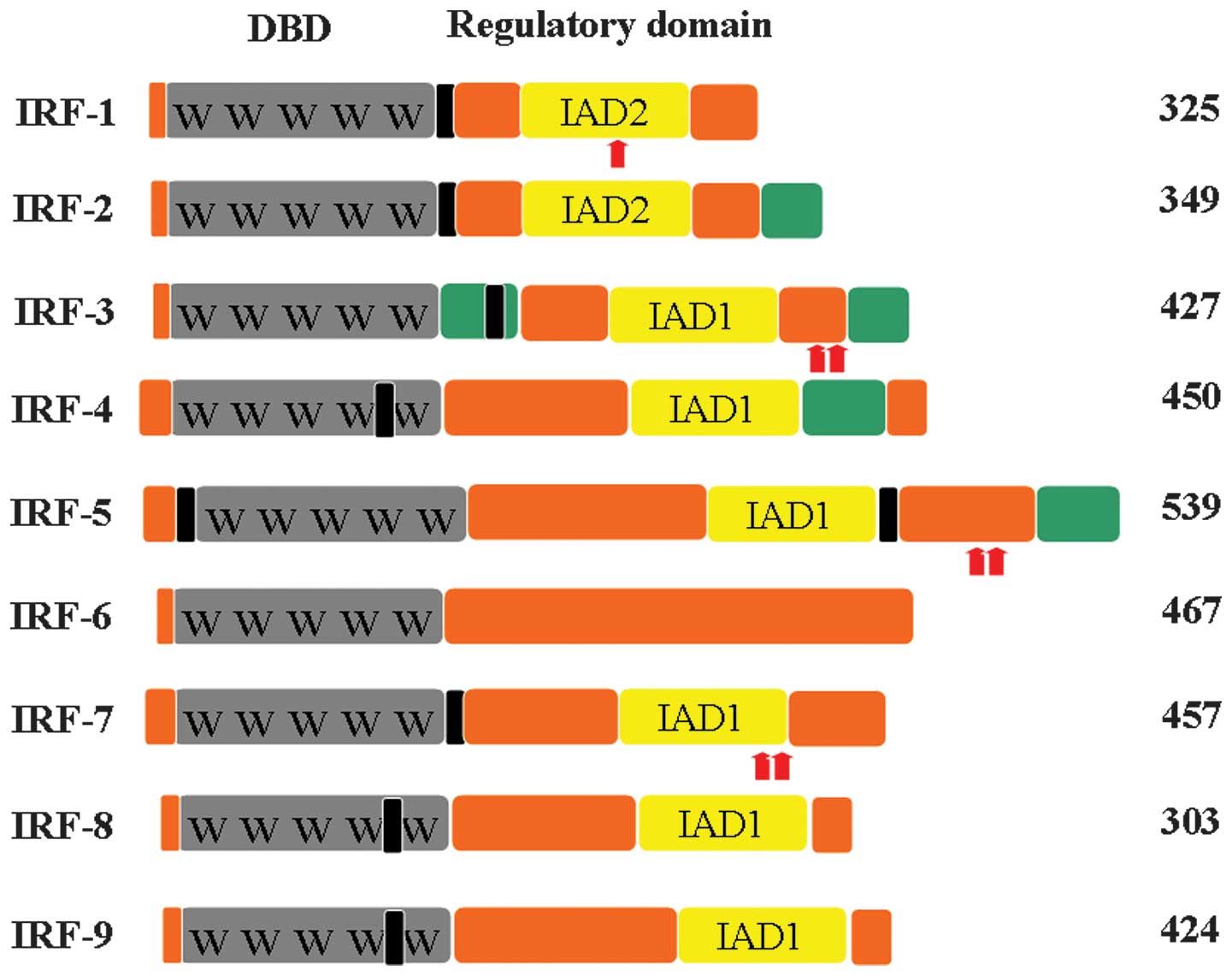

 Figure 1. - Structure of IRFs. All IRFs contain an amino-terminal DNA binding domain (DBD) that is characterized by a series of five well-conserved tryptophan-rich repeats (grey) and a regulatory domain (yellow). The DBD forms a helix-turn-helix domain and recognizes a DNA sequence similar to the IFN-stimulated response element. The majority of IRFs also contain an IRF-association domain (IAD) of type 1 (IAD1) or type 2 (IAD2). Specific IRFs contain repression domain(s) (red) and a nuclear-import signal(s) (black). For IRF-1, 3, 5 and 7, the mark of red arrows show that activity depends on phosphorylation. The number of amino acids of each IRF is indicated. IFN, interferon; IRF, IFN regulatory factor.

  • (Kommentti. Suomennosta:  IRF-peptidin rakenne: Kaikilla niillä on N-päädyssään eli aminoterminaalissaan  DNA:ta sitova domeeni (DBD) (, joka on kuvassa  harmaa)  ja säätelyllinen domeeni (keltainen). DNA:ta sitova domeeni (DBD) on    helix-kääntymä-helix-muotoinen (coiled  coil)   ja tunnistaa   DNA-sekvenssiä, joka  on interferonille stimuloituvan vaste-elementin (IRE)  kanssa samanlainen. Useimmilla IRF-peptideillä on myös IRF-assosiaatiodomeeni 1 tai 2  (IAD1, IAD2) Spesifisillä IRF-proteiineilla on repressiodomeeninsa (punainen) ja  tumaan kuljettava signaali (NLS) (musta).  Seuraavista,  IRF-1, IR-3, IRF-5 ja IRF-7, mainitaan niiden punaisen merkin  tarkoittavn, että  niiden aktiivisuus riippuu fosforylaatiosta. Päädyssä on peptidin aminohappojen lukumäärä mainittuna.  IFN = interferoni. IRF =  interferonin säätelytekijä.
  • IRF-1 mainittiin IRF-perheen  ensimmäisenä jäsenenä, joka saatiin eristettyä siksi,  koska sillä oli affiniteettia IFN beetan promoottoriin. Interferoni, dsDNA,  sytokiinit ja spesifiset hormonit indusoivat sen muodostusta. Indusoitunut IRF-1   aktivoi kohdegeenejä, mikä johtaa  soluproliferaation estymiseen ja solun apoptoosin stimuloitumiseen, mikä vähentää onkogeenisyyden mahdollisuuksia. Lisäksi sillä on osuutta NK.solujen  kehittymiseen sekä  Th1 ja  CD8+ T solujen  erilaistumiseen. .
  • IRF-2 kiinnittyy samaan DNA-sekvenssiin kuin IRF-1, mutta säätää alas IRF-1 kohdegeenit tai estää niiden aktivoitumisen. On kertyvää  näyttöä siitä, että IRF-1 on antionkogeeninen ja IRF-2 onkogeeninen luonteeltaan. 
  • IRF-4 on tutkittu onkogeenisyyden suhteen ja onkogeneesiä on  raportoitu  EBV viruksen transformoimissa imusoluissa ja HTLV-1 viruksen indusoimassa leukemogeneesissä. 
  •   Mutta IRF-4 yksinään  ei pystynyt  aihuttamaan onkogeneesiä   transgeenisessä hiiressä, jonka imusolut  ilmensivät ylimäärin  IRF-4  interferoni- säätelijää.   Mahdollisesti IRF-4 säätelee  solukasvua kohdentamalla  vaikutusta EBV-transformaation aikana pro-apoptoottiseen IRF-5-interferonisäätelijään.
  •  IRF-8 interferonisäätelijän on huomattu ilmentävän tuumorinvastaista aktiivisuutta solukasvun erilaistumisen ja apoptoosin suoralla kontrollilla ja  tuumorinvastaista immuniteettiä moduloimalla. 
  • IRF-6 saattanee myös toimia tuumorisuppressorina maspin-interaktionsa takia. Maspin on eräs tuumorisuppressorigeeni. 
  • IRF-perheen jäsen IRF-7 välittää  EBV transformaatioprosessia  EBV-virukseen assosioituvan lymfooman patogeneesissä, mikä on viite   tämän IRF-jssenen onkogeenisestä luonteesta

IRF-1 was the first member of the IRF family to be isolated by virtue of its affinity to specific DNA sequences in the IFN-β promoter (7). The molecule is markedly induced by IFN, double-stranded RNA (dsRNA), cytokines and specific hormones. Induced IRF-1 activates target genes leading to inhibition of cell proliferation and stimulation of cell apoptosis (5) .IRF-2 binds to the same DNA sequences as IRF-1 but downregulates or blocks the activation of IRF-1 target genes. Accumulating evidence indicates that IRF-1 and IRF-2 have antioncogenic and oncogenic potentials, respectively (6).  A correlation between IRF-4 and oncogenesis has also been reported in Epstein-Barr virus (EBV)-transformed lymphocytes and HTLV-1-induced leukemogenesis (8,9).  Notably, IRF-4 alone is not sufficient for oncognesis in transgenic mice overexpressing IRF-4 in lymphocytes.  IRF-4 may regulate cellular growth by targeting pro-apoptotic IRF-5 during EBV transformation.  In addition, IRF-8 has been revealed to exhibit antitumor activity through direct control of cell growth, differentiation and apoptosis and modulation of antitumor immunity (12).  IRF-6 may also act as a tumor suppressor via its interaction with maspin, a tumor suppressor gene (13).  An additional member of the IRF family, IRF-7, mediates the EBV transformation process in the pathogenesis of EBV-associated lymphomas indicative of oncogenic properties (14). 


IRF5 ,artikkeli ajalta ennen pandemiaa Covid-19

 Otan sitaatin tästä luonnollisen immuniteetin alueen tekijästä IRF5, koska se, OGT ja hexosaminisysteemin ylössäätyminen SARS-2 infektiossa assosioituvat  yhteen ja  kliinisesti  havaitaan keuhkoissa  aineksia, joiden koostumuseksessa on kiihtyneellä hexosaminitiellä osuutensa.  Ne eivät ole virusproteiinin tuottamia vaan viruksen  säätämän  ihmismetabolian tuotteita  sillä aikaa kun virus saa replikaatiolleen etuja.  


30 May 2018 : Laboratory Research  

Expression Levels of Interferon Regulatory Factor 5 (IRF5) and Related Inflammatory Cytokines Associated with Severity, Prognosis, and Causative Pathogen in Patients with Community-Acquired Pneumonia

Xiaohong Wang1ABCDEF, Jia Guo1BCD, Ying Wang2BD, Yue Xiao2AB, Liying Wang2A, Shucheng Hua2AG*

DOI: 10.12659/MSM.910756

Med Sci Monit 2018; 24: LBR3620-3630

Abstract

BACKGROUND: Community-acquired pneumonia (CAP) is a common disease with significant morbidity and mortality. Interferon regulatory factor 5 (IRF5), which induces type I interferons (IFNs) and cytokines such as interleukin (IL)-6, tumor necrosis factor (TNF)-α, IL-10, and interferon gamma-induced protein (IP)10, is a key transcription factor involved in controlling the expression of proinflammatory cytokines and responses to infection. Here, we carefully investigated the role of IRF5 in regulating immune responses to CAP.

MATERIAL AND METHODS: QRT-PCR was used to detect the mRNA levels of IRF5, IL-6, IL-10, IP10, TNF-α, and IFN-α in the peripheral blood of 71 CAP patients and 31 healthy controls, as well as in the bronchoalveolar lavage cells of 20 patients with CAP and 23 patients with lung cancer (using samples from the unaffected lung). Flow cytometry was performed to detect the protein level of IRF5, and a CBA flex set was used to detect the levels of these cytokines in the volunteers.

RESULTS: The expression levels of IRF5 and its related cytokines were significantly increased in CAP patients compared with the controls. Additionally, IRF5, IL-6, IL-10, and IP10 levels were found to be related with the severity of CAP. Furthermore, the levels of IRF5 and IFN-a increased significantly in the early phase of pneumonia caused by influenza virus infection.

CONCLUSIONS: IRF5 and its related inflammatory cytokines are associated with the severity, prognosis, and causative pathogen of CAP patients. This finding may provide new drug targets for the prevention and treatment of severe pneumonia caused by influenza virus.

Keywords: Community-Acquired Infections, Cytokines, Influenza A virus, Interferon Regulatory Factors

måndag 26 september 2022

OGT geeni pohdittavaksi


Aliases for OGT Gene

  • GeneCards Symbol: OGT 2
  • O-Linked N-Acetylglucosamine (GlcNAc) Transferase 2 3 5
  • O-GLCNAC 2 3 5
  • HRNT1 2 3 5
  • OGT1 2 3 5
  • O-Linked N-Acetylglucosamine (GlcNAc) Transferase (UDP-N-Acetylglucosamine:Polypeptide-N-Acetylglucosaminyl Transferase) 2 3
  • UDP-N-Acetylglucosamine--Peptide N-Acetylglucosaminyltransferase 110 KDa Subunit 3 4
  • UDP-N-Acetylglucosamine:Polypeptide-N-Acetylglucosaminyl Transferase 2 3
  • O-Linked N-Acetylglucosamine Transferase 110 KDa Subunit 3 4
  • O-GlcNAc Transferase Subunit P110 3 4
  • MGC22921 2 5
  • FLJ23071 2 5
  • Uridinediphospho-N-Acetylglucosamine:Polypeptide Beta-N-Acetylglucosaminyl Transferase 3
  • O-GlcNAc Transferase P110 Subunit 3
  • EC 2.4.1.255 4
  • EC 2.4.1.186 48
  • HINCUT-1 3
  • EC 2.4.1 48
  • XLID106 3
  • MRX106 3

External Ids for OGT Gene

Entrez Gene Summary for OGT Gene

  • This gene encodes a glycosyltransferase that catalyzes the addition of a single N-acetylglucosamine in O-glycosidic linkage to serine or threonine residues. Since both phosphorylation and glycosylation compete for similar serine or threonine residues, the two processes may compete for sites, or they may alter the substrate specificity of nearby sites by steric or electrostatic effects. The protein contains multiple tetratricopeptide repeats that are required for optimal recognition of substrates. Alternatively spliced transcript variants encoding distinct isoforms have been found for this gene. [provided by RefSeq, Oct 2009]

GeneCards Summary for OGT Gene

OGT (O-Linked N-Acetylglucosamine (GlcNAc) Transferase) is a Protein Coding gene. Diseases associated with OGT include Intellectual Developmental Disorder, X-Linked 106 and Myoepithelioma. Among its related pathways are Glucose / Energy Metabolism and Programmed Cell Death. Gene Ontology (GO) annotations related to this gene include identical protein binding and phosphatidylinositol-3,4,5-trisphosphate binding. An important paralog of this gene is TTC16.

UniProtKB/Swiss-Prot Summary for OGT Gene

Catalyzes the transfer of a single N-acetylglucosamine from UDP-GlcNAc to a serine or threonine residue in cytoplasmic and nuclear proteins resulting in their modification with a beta-linked N-acetylglucosamine (O-GlcNAc) (PubMed:26678539, 23103939, 21240259, 21285374, 15361863). Glycosylates a large and diverse number of proteins including histone H2B, AKT1, ATG4B, EZH2, PFKL, KMT2E/MLL5, MAPT/TAU and HCFC1 (PubMed:19451179, 20200153, 21285374, 22923583, 23353889, 24474760, 26678539, 27527864).

 Can regulate their cellular processes via cross-talk between glycosylation and phosphorylation or by affecting proteolytic processing (PubMed:21285374). 

Probably by glycosylating KMT2E/MLL5, stabilizes KMT2E/MLL5 by preventing its ubiquitination (PubMed:26678539). 

Involved in insulin resistance in muscle and adipocyte cells via glycosylating insulin signaling components and inhibiting the 'Thr-308' phosphorylation of AKT1, enhancing IRS1 phosphorylation and attenuating insulin signaling (By similarity)

 Involved in glycolysis regulation by mediating glycosylation of 6-phosphofructokinase PFKL, inhibiting its activity (PubMed:22923583).

 Component of a THAP1 (Znf protein) /THAP3-HCFC1-OGT complex that is required for the regulation of the transcriptional activity of RRM1.

 Plays a key role in chromatin structure by mediating O-GlcNAcylation of 'Ser-112' of histone H2B: recruited to CpG-rich transcription start sites of active genes via its interaction with TET proteins (TET1, TET2 or TET3) (PubMed:22121020, 23353889).

 As part of the NSL complex indirectly involved in acetylation of nucleosomal histone H4 on several lysine residues (PubMed:20018852).

 O-GlcNAcylation of 'Ser-75' of EZH2 increases its stability, and facilitating the formation of H3K27me3 by the PRC2/EED-EZH2 complex (PubMed:24474760).

 Regulates circadian oscillation of the clock genes and glucose homeostasis in the liver. Stabilizes clock proteins ARNTL/BMAL1 and CLOCK through O-glycosylation, which prevents their ubiquitination and subsequent degradation. 

Promotes the CLOCK-ARNTL/BMAL1-mediated transcription of genes in the negative loop of the circadian clock such as PER1/2 and CRY1/2 (PubMed:12150998, 19451179, 20018868, 20200153, 21285374, 15361863).

 O-glycosylates HCFC1 and regulates its proteolytic processing and transcriptional activity (PubMed:21285374, 28584052, 28302723).

 Regulates mitochondrial motility in neurons by mediating glycosylation of TRAK1 (By similarity). Glycosylates HOXA1 (By similarity). 

 O-glycosylates FNIP1 (PubMed:30699359). Promotes autophagy by mediating O-glycosylation of ATG4B (PubMed:27527864). ( OGT1_HUMAN,O15294 )

[Isoform 2]: The mitochondrial isoform (mOGT) is cytotoxic and triggers apoptosis in several cell types including INS1, an insulinoma cell line. ( OGT1_HUMAN,O15294


Hexosaminitien keskeinen asema 

 https://bmcbiol.biomedcentral.com/articles/10.1186/s12915-019-0671-3


Lisääntyvätkö uudet diabetestapaukset covid-19- pandemiasta? Haku: PubMed

3 articles found by citation matching

Increase in the Number of Pediatric New-Onset Diabetes and Diabetic Ketoacidosis Cases During the COVID-19 Pandemic.
Chambers MA, et al. Endocr Pract. 2022. PMID: 35189332 Free PMC article.
Abstract
Objective: Infection with SARS-CoV-2 induces a proinflammatory state that causes hyperglycemia and may precipitate diabetic ketoacidosis (DKA) in patients with known or new-onset diabetes. We examined the trends in new-onset diabetes and DKA prior to and following the onset of the COVID-19 pandemic.Methods: This single-center retrospective observational study included pediatric patients (aged 0 to <18 years) hospitalized with new-onset type 1 diabetes or type 2 diabetes (T2D) before (March 1, 2018, to February 29, 2020) and after (March 1, 2020 to December 31, 2020) the pandemic onset. Demographic, anthropometrics, laboratory and clinical data, and outcomes were obtained. Results: Among 615 children admitted with new-onset diabetes during the entire study period, 401 were admitted before the pandemic onset, and 214 were admitted after the pandemic onset. Children admitted with new-onset diabetes in the postpandemic period were significantly more likely to present with DKA (odds ratio, 1.76; 95% confidence interval, 1.24-2.52) than in the prepandemic phase. Children with DKA after the pandemic onset had higher lengths of hospitalization and were significantly more likely to experience severe DKA (odds ratio, 2.17; 95% confidence interval, 1.34-3.52). A higher proportion of children with DKA admitted to the pediatric intensive care unit required oxygen support after the pandemic onset than before the pandemic onset (8.85% vs 1.92%). Most cases of T2D with DKA occurred following the onset of the pandemic (62.5%). Conclusion: A significant increase in T2D cases occurred following the onset of the COVID-19 pandemic with a greater risk of DKA and severe ketoacidosis. Racial disparity was evident with a higher proportion of Black and American Indian children presenting with ketoacidosis following the pandemic onset.
Keywords: COVID-19; children; diabetes; disparity; ketoacidosis.

 
Increased Severe Cases and New-Onset Type 1 Diabetes Among Children Presenting With Diabetic Ketoacidosis During First Year of COVID-19 Pandemic in Turkey.
Kiral E, et al. Front Pediatr. 2022. PMID: 35844756 Free PMC article. Methods: This is a retrospective multi-center study among 997 children and adolescents with type 1 diabetes who were admitted with DKA to 27 pediatric intensive care units in Turkey between the first year of pandemic and pre-pandemic year. Results: The percentage of children with new-onset Type 1 diabetes presenting with DKA was higher during the COVID-19 pandemic (p < 0.0001). The incidence of severe DKA was also higher during the COVID-19 pandemic (p < 0.0001) and also higher among children with new onset Type 1 diabetes (p < 0.0001). HbA1c levels, duration of insulin infusion, and length of PICU stay were significantly higher/longer during the pandemic period. Eleven patients tested positive for SARS-CoV-2, eight were positive for new onset Type 1 diabetes, and nine tested positive for severe DKA at admission. Discussion: The frequency of new onset of Type 1 diabetes and severe cases among children with DKA during the first year of the COVID-19 pandemic. Furthermore, the cause of the increased severe presentation might be related to restrictions related to the pandemic; however, need to evaluate the potential effects of SARS-CoV-2 on the increased percentage of new onset Type 1 diabetes.
 
The Value of Telemedicine for the Follow-up of Patients with New Onset Type 1 Diabetes Mellitus During COVID-19 Pandemic in Turkey: A Report of Eight Cases.
Evin F, et al. J Clin Res Pediatr Endocrinol. 2021. PMID: 33084289 Free PMC article.The current Coronavirus disease-2019 (COVID-19) pandemic has forced health care teams to look for alternative approaches to manage a great number of children with diabetes, not only in rural but also in urban locations. The aim was to assess the provision of information about follow-up of new-onset pediatric type 1 diabetes (T1D) patients, and to investigate the integration of telemedicine into routine clinical care in the long term. The changes in coefficient of variation (CV), standard deviation and percentages of time in range (TIR), time below range (TBR) and time above range were evaluated in eight children with new-onset T1D, diagnosed during the COVID-19 pandemic. The study period was two-months of follow-up using a telemedicine system. Median follow-up time was 51 (24-66) days. Two of the patients were using low glucose suspend system and six were on multiple daily injection therapy. Target TIR values were achieved in seven patients in the last televisit and, in line with recent guidelines, a TBR <70 mg/dL (<3.9 mmol/L) (level 1 hypoglycemia) of <4% and a TBR <54 mg/dL (<3.0 mmol/L) (level 2 hypoglycemia) of <1% were achieved in all patients. Seven patients achieved a CV of <36% at their last televisit. Telemedicine as an alternative follow-up tool during unusual circumstances such pandemics, even in countries where it is not routinely used, could be beneficial to achieve optimum glycemic control in patients with new-onset T1D.
 
 
COVID-19-Induced New-Onset Diabetes: Trends and Technologies.
Metwally AA, Mehta P, Johnson BS, Nagarjuna A, Snyder MP. Diabetes. 2021 Dec;70(12):2733-2744. doi: 10.2337/dbi21-0029. Epub 2021 Oct 22. PMID: 34686519 Free PMC article. Review.
The coronavirus disease 2019 (COVID-19) global pandemic continues to spread worldwide with approximately 216 million confirmed cases and 4.49 million deaths to date. ...Likewise, an increased frequency of diabetes onset and diabetes compl …The coronavirus disease 2019 (COVID-19) global pandemic continues to spread worldwide with approximately 216 million confirmed cases and 4.49 million deaths to date. Intensive efforts are ongoing to combat this disease by suppressing viral transmission, understanding its pathogenesis, developing vaccination strategies, and identifying effective therapeutic targets. Individuals with preexisting diabetes also show higher incidence of COVID-19 illness and poorer prognosis upon infection. Likewise, an increased frequency of diabetes onset and diabetes complications has been reported in patients following COVID-19 diagnosis. COVID-19 may elevate the risk of hyperglycemia and other complications in patients with and without prior diabetes history. It is unclear whether the virus induces type 1 or type 2 diabetes or instead causes a novel atypical form of diabetes. Moreover, it remains unknown if recovering COVID-19 patients exhibit a higher risk of developing new-onset diabetes or its complications going forward. The aim of this review is to summarize what is currently known about the epidemiology and mechanisms of this bidirectional relationship between COVID-19 and diabetes. We highlight major challenges that hinder the study of COVID-19-induced new-onset of diabetes and propose a potential framework for overcoming these obstacles. We also review state-of-the-art wearables and microsampling technologies that can further study diabetes management and progression in new-onset diabetes cases. We conclude by outlining current research initiatives investigating the bidirectional relationship between COVID-19 and diabetes, some with emphasis on wearable technology.

IRF5 geeni .IRF5 on avainasemassa Covid-19 hyperinflammaatiossa. Hexosaminitie säätyy ylös viruksen replikaation eduksi. Calmette-rokotuksen osuus.

Entrez Gene Summary for IRF5 Gene /(7q321)
  • This gene encodes a member of the interferon regulatory factor (IRF) family, a group of transcription factors with diverse roles, including virus-mediated activation of interferon, and modulation of cell growth, differentiation, apoptosis, and immune system activity. Members of the IRF family are characterized by a conserved N-terminal DNA-binding domain containing tryptophan (W) repeats. Alternative promoter use and alternative splicing result in multiple transcript variants, and a 30-nt indel polymorphism (SNP rs60344245) can result in loss of a 10-aa segment. [provided by RefSeq, Dec 2016]

GeneCards Summary for IRF5 Gene

IRF5 (Interferon Regulatory Factor 5) is a Protein Coding gene. Diseases associated with IRF5 include Systemic Lupus Erythematosus 10 and Inflammatory Bowel Disease 14. Among its related pathways are TNFR1 Pathway and Senescence and autophagy in cancer. Gene Ontology (GO) annotations related to this gene include DNA-binding transcription factor activity and transcription cis-regulatory region binding. An important paralog of this gene is IRF6.

UniProtKB/Swiss-Prot Summary for IRF5 Gene

Transcription factor that plays a critical role in innate immunity by activating expression of type I interferon (IFN) IFNA and INFB and inflammatory cytokines downstream of endolysosomal toll-like receptors TLR7, TLR8 and TLR9 (PubMed:11303025, 15695821, 22412986, 25326418, 32433612). Regulates the transcription of type I IFN genes (IFN-alpha and IFN-beta) and IFN-stimulated genes (ISG) by binding to an interferon-stimulated response element (ISRE) in their promoters (By similarity). Can efficiently activate both the IFN-beta (IFNB) and the IFN-alpha (IFNA) genes and mediate their induction downstream of the TLR-activated, MyD88-dependent pathway (By similarity). Key transcription factor regulating the IFN response during SARS-CoV-2 infection (PubMed:33440148). ( IRF5_HUMAN,Q13568 )

Protein attributes for IRF5 Gene
  • Size:498 amino acids
  • Molecular mass:56044 DaQuaternary structure:
  • Homodimer, when phosphorylated (PubMed:25326418, 18836453).
    • Interacts with TASL (via pLxIS motif); interaction takes place downstream of TLR7, TLR8 or TLR9, leading to its activation (PubMed:32433612).
      Interacts with MYD88 and TRAF6 (By similarity).
  •  

    Figure 1
    Work in progress hypothesis for the hyperinflammatory HBP-GlcNAc-OGT–IRF5-interferon-SARS-CoV-2 pathway leading to the cytokine storm.
     

    Working Hypothesis for Glucose Metabolism and SARS-CoV-2 Replication: Interplay Between the Hexosamine Pathway and Interferon RF5 Triggering Hyperinflammation. Role of BCG Vaccine?

    • ONKO BCG  calmettointi  hyödyllinen asia  koronapandemiasta selviämisessä?   Tätä pohdittu seuraavassa artikkelissa vuodelta 2021:
     https://pubmed.ncbi.nlm.nih.gov/33790587/
     eCollection 2021.

    BCG Vaccine-Induced Trained Immunity and COVID-19: Protective or Bystander?

    Abstract
    In late 2019, a new virulent coronavirus (CoV) emerged in Wuhan, China and was named as severe acute respiratory syndrome coronavirus-2 (SARS-CoV-2). This virus spread rapidly, causing the coronavirus disease-2019 (COVID-19) pandemic. Bacillus Calmette-Guérin (BCG) is a live attenuated tuberculosis (TB) vaccine, associated with induction of non-specific cross-protection against unrelated infections. This protection is a memory-like response in innate immune cells (trained immunity), which is caused by epigenetic reprogramming via histone modification in the regulatory elements of specific genes in monocytes. COVID-19 related epidemiological studies showed an inverse relationship between national BCG vaccination policies and COVID-19 incidence and death, suggesting that BCG may induce trained immunity that could confer some protection against SARS-CoV-2. As this pandemic has put most of Earth's population under quarantine, repurposing of the old, well-characterized BCG may ensure some protection against COVID-19. This review focuses on BCG-related cross-protection and acquisition of trained immunity, as well as the correlation between BCG vaccination and COVID-19 incidence and mortality.

    Keywords: BCG vaccine; COVID-19; coronavirus; trained immunity; tuberculosis. 


    Kommentti: Post-pandemisen vaiheen  kansanterveystyössä olisi mielstäni suositeltavaa käynnistää vanhanaikainen  tubitarkastus eli niitä keuhkoröntgeneitä, koska tubilla ja covidilla on samantapainen  vaikutus immuunikarttaan ja kohde-elimen valintaan.   Ja molempien tautien yhteisvaikutustakin saataa esiintyä.  Ne tavalliset  kylästä kylään rullaavat minithorax-tutkimukset eivät ole mahdotonta toteuttaa. Calmettointikin on  suositeltavaa maailmassa. .

    GLP-1 analogeista metabolisen oireyhtymän ja diabeteksen DM2 hoitoon. Semaglutidin kysynnästä obesitashoitoon.


    Suomen uutisissa mainitaan semaglutide- lääkkeen puute diabeetikoilla, koska lääkettä on alettu käyttää toiseen indikaatioon, obesitas, enenevästi. Kyse on lääkkeen injisoitavasta muodosta. Lääkkeestä on myös tablettimuoto diabeteksen hoitoon. Ruotsissa on 2 valmistetta semaglutidia:

    Toinen on suun kautta otettava tablettimuoto.Rybelsus. Toinen on injektiomuoto Ozempic (NovoNordisk), josta Suomen lehdistä mainitsee.

    Uutiset https://www.aamulehti.fi/uutiset/art-2000009091964.html

    Elintärkeä diabeteslääke loppui Suomen apteekeista, syynä sen suuri suosio laihdutuslääkkeenä – ”Kaikki varastot on myyty loppuun” Ozempicia käytetään tyypin 2 diabeteksessa verensokerin hoitoon. Lääkkeellä on havaittu myös selvästi laihduttava vaikutus, mikä on saanut sen kysynnän rajuun kasvuun syksyn aikana….

    • Inkretiinilääkkeiden historiasta muutama artikkeli:

        • Vuodelta 2022 ( semaglutide)

    Wegovy (semaglutide): a new weight loss drug for chronic weight management.

    Singh G, Krauthamer M, Bjalme-Evans M. J Investig Med. 2022 Jan;70(1):5-13. doi: 10.1136/jim-2021-001952. Epub 2021 Oct 27. PMID: 34706925 Free PMC article. Review.

        • Vuodelta 2021 (semaglutide)

    Front Endocrinol (Lausanne) 2021 Jul 7;12:645563.

    eCollection 2021. Safety of Semaglutide Mark M Smits  1 et al. DOI: 10.3389/fendo.2021.645563 Free PMC article

    GLP-1RA and SGLT2i: Cardiovascular Impact on Diabetic Patients

    Author(s): Aschner Pablo et al. Volume 17, Issue 2, 2021 Published on: 24 November, 2020 DOI: 10.2174/1573402116999201124123549 Background: Diabetes is a chronic disease with high complexity that demands strategic medical care with a multifactorial risk-reduction approach. Over the past decade, the treatment of type 2 diabetes mellitus (T2DM) has entirely changed. One of the paradigm changes has been the arrival of new drugs that reduce cardiovascular risk beyond the reduction of A1C. Objective: Sodium-glucose cotransporter 2 (SGLT2i) and glucagon-like peptide-1 receptor agonist (GLP-1RA) are two groups of antidiabetics drugs, which have demonstrated superiority compared to placebo for major cardiovascular events (MACE).

    Methods: We update and discuss their impact on MACE expressed as relative risk (HR hazard ratio) and as the number needed to treat (NNT) to avoid one cardiovascular event in 5 years. We include the publications of the last 10 years. Results: Empagliflozin, Canagliflozin and Dapagliflozin present an HR for MACE of 0.86, 0.86, 0.86 and an NNT of 38, 44, and 33, respectively (Dapagliflozin in secondary prevention). Regarding HHF (Hospitalization for Heart Failure), the HR was 0.65, 0.67, 0.73 and NNT was 44, 62, and 98, respectively. Lixisenatide, Exenatide, Liragutide, Semaglutide, Albiglutide and Dulaglutide presented for MACE an HR of 1.02, 0.91, 0.87, 0.74, 0.78, 0.88, respectively. There was no increase in the risk of HHF, but there was no benefit either. Conclusion: Cardiovascular benefits of the GLP-1RA and the SGLT2i are clinically significant. A number needed to treat under 50 is required to avoid one MACE in five years. These benefits have led to important changes in the Clinical Practice Guidelines and in the care of our patients with T2DM. Keywords: Cardiovascular outcomes, glucose lowering medications, type 2 diabetes mellitus, SGLT2i, GLP1 agonist, cardiovascular mechanisms, cardiovascular disease.

        • Vuodelta 2020 ( Semaglutide , dulaglutide, exenatide, liraglutide, lixisenatide)

    https://pubmed.ncbi.nlm.nih.gov/31990244/

    J Med Econ 2020 Jun;23(6):650-658.

    doi: 10.1080/13696998.2020.1722678. Epub 2020 Feb 7. Oral semaglutide versus injectable glucagon-like peptide-1 receptor agonists: a cost of control analysis B B Hansen  1 S Nuhoho  1 S N Ali  2 T Dang-Tan  2 W J Valentine  3 S J P Malkin  3 B Hunt  3 DOI: 10.1080/13696998.2020.1722678 Free article Results: For the treatment target of HbA1c ≤6.5%, once-weekly semaglutide 1 mg and oral semaglutide 14 mg were associated with the lowest costs of control, at USD 15,430 and USD 17,383 per patient achieving target, respectively. Similarly, the cost of control was lowest with once-weekly semaglutide 1 mg at USD 12,627 per patient achieving target, followed by oral semaglutide 14 mg at USD 13,493 per patient achieving target for the target of HbA1c <7.0%. All other interventions were associated with higher cost of control values for both targets. Conclusions: Oral semaglutide 14 mg is likely to be cost-effective versus dulaglutide, exenatide (once weekly and twice daily), liraglutide, and lixisenatide in terms of bringing people with type 2 diabetes to glycemic control targets of HbA1c ≤6.5% and HbA1c <7.0% in the US.

    (Bacground: Clinicians have a range of treatment options available to treat people with type 2 diabetes not achieving glycemic control on metformin monotherapy, including modern interventions such as glucagon-like peptide-1 (GLP-1) receptor agonists, sodium-glucose cotransporter-2 (SGLT-2) inhibitors, dipeptidyl peptidase-4 (DPP-4) inhibitors, and older interventions such as thiazolidinediones and sulfonylureas1. GLP-1 receptor agonists are recommended when there is a need to minimize the risk of hypoglycemia, and when there is a need to minimize weight gain or promote weight loss1. Furthermore, GLP-1 receptor agonists with a proven positive impact on the risk of cardiovascular disease are preferred for treatment of patients at high risk of cardiovascular disease1. )

    • Vuodelta 2020 (lixisenatide)

    Low-dose lixisenatide protects against early-onset nephropathy induced in diabetic rats

    2020, Life Sciences

    https://www.sciencedirect.com/science/article/abs/pii/S002432052031345X

    Lixisenatide, in a low dose regimen, induced a nephroprotective effect evident by significant decreases in serum creatinine and serum urea along with improved renal histology. Low lixisenatide dose showed an antioxidant effect, exhibited by a significant decrease in renal malondialdehyde and total NOx− levels along with a marked rise in total antioxidant capacity. Apart from ameliorating glucose intolerance and insulin resistance, significant down-regulation in renal expressions of iNOS, COX-2, and TGF-B1 were recorded in the diabetic group treated with low dose lixisenatide. Furthermore, low dose lixisenatide was reported to be superior to glimepiride as a nephroprotective. On the contrary, treatment with large dose lixisenatide was founded to be deleterious.

        • Vuodelta 2019 kuva (liraglutide, semaglutide)

    Figure: GLP-1, liraglutide, semaglutide:

    https://www.google.com/url?sa=i&url=https%3A%2F%2Fwww.dovepress.com%2Foral-semaglutide-in-the-management-of-type-2-diabetes-a-report-on-the--peer-reviewed-fulltext-article-DMSO&psig=AOvVaw2JseAF06mq6uzFOGlZnRLQ&ust=1664268015531000&source=images&cd=vfe&ved=0CAkQjRxqFwoTCLiykeqHsvoCFQAAAAAdAAAAABAD

    • Vuodelta 2019: Obes Rev 2019 Jun;20(6):805-815.

    Epub 2019 Feb 15. Semaglutide as a promising antiobesity drug Georgios A Christou  1 et al. DOI: 10.1111/obr.12839 https://pubmed.ncbi.nlm.nih.gov/30768766/ Semaglutide is a glucagon-like peptide-1 receptor agonist (GLP-1 RA) with a long elimination half-life, allowing subcutaneous (sc) administration once per week. Both the European Medicines Agency (EMA) and the Food and Drug Administration (FDA) recently approved once-weekly sc semaglutide for the treatment of type 2 diabetes mellitus (T2DM). The weight loss efficacy of once-weekly sc semaglutide appears to be superior compared with the other once-weekly GLP-1 RAs in patients with T2DM. Semaglutide was recently evaluated as an antiobesity drug in a phase II dose-finding trial, which demonstrated superior weight loss efficacy of once daily sc semaglutide compared with both placebo and once daily 3.0 mg liraglutide in patients with obesity but without T2DM. The magnitude of semaglutide-induced weight loss in this study exceeded the criteria of both the EMA and FDA for antiobesity drugs, and there were no safety concerns, indicating the eligibility of once daily sc semaglutide as a future antiobesity drug.

        • Vuodelta 2019 (liraglutide, semaglutide)

    The Discovery and Development of Liraglutide and Semaglutide. Knudsen LB, Lau J. Front Endocrinol (Lausanne). 2019 Apr 12;10:155. doi: 10.3389/fendo.2019.00155. eCollection 2019. PMID: 31031702 Free PMC article. Review. Furthermore, the development of an oral formulation for semaglutide may provide individuals with additional benefits in relation to treatment adherence. In addition to T2D, liraglutide is used in the treatment of obesity, while semaglutide is currently under investi …

        • Vuodelta 2018 ( GLP-1RAs, insulin combination)

    Am J Med 2018 Nov;131(11):1304-1306.

    doi: 10.1016/j.amjmed.2018.05.043. Epub 2018 Jul 2. New Injectable Agents for the Treatment of Type 2 Diabetes Part 2-Glucagon-Like Peptide-1 (GLP-1) Agonists Christa George  1 AhYoung Byun  2 Amanda Howard-Thompson  3 Affiliations DOI: 10.1016/j.amjmed.2018.05.043 Abstract The US Food and Drug Administration has recently approved several new glucagon-like peptide-1 (GLP-1) agonists alone and in combination with various insulin products. The second of 2 articles in a series, this review will describe the potential advantages and disadvantages of the GLP-1 agonist class of products. Keywords: GLP-1 combination products; Glucagon like peptide-1 (GLP-1) agonist; Type 2 diabetes.

    • Vuodelta 2016 (exenatide, albiglutide, dulaglutide, liraglutide, lixisenatid)

    • Vuodelta 2015 informaatiota ruotsalaisesta diabeteslääkehoidon arsenaalista: Mikael Ry´den :Inkretinläkemedel- dyra med oklara läkemedeleffekter (Sida 67) “Det senaste tillskottet I den terapeutiska arsenalen är preparat som påverkar inkretinsystemet. Glukagonlik peptid 1 (GLP-1) är den fysiologiskt kanske viktigaste inkretinen, som verkar genom att öka insulinfrisättningen på intracellulära steg nedom sulfonylureapreparat (SU). Det innebär bl a att GLP-1 stimulerar insulinfrisättningen endast vid förhöjda glukosvärden. Antingen kan man ge subkutana injektioner av GLP-1-analoger (exanatide, liraglutide etc. ) eller perorala preparat som hämmar enzymet dipeptidylpeptidas-4 (DPP4) (sitagliptin etc.) , som bryter ned endogent GLP-1 HbA1c sänks med ca 1 procentenhet med GLP-1-analoger och med 0,7 procentenheter med DPP4-hämmare. GLP-1-analoger förlångsammar även ventrikeltömmningen och kan eventuellt ha effekter på centrala mättnadssystemet. Illamående är vanlig biverkan, men för de patienter som föredrar behandlingen innebär behandlingen med GLP-1-analoger ofta viktnedgång. I kliniska studier har man observerat en viktminskning på ca 3 kg under sex månader, men hos enskilda individer kan effekten vara både större och mindre. DPP-4 hämmare (-gliptiner) är viktneutrala. Det finns ännu inga långtidsstudier på något av dessa preparat, och de är väsentligt dyrare än övriga läkemedel, varför de bör användas restriktivt. Följaktligen bör de betraktas som tredjehandspreparat (prioritet 10 enligt Socialstyrelsen) . En lämplig patient för GLP-1-analoger kan t ex vara en kraftigt obes patient med postprandiala hyperglykemier, där insulin lett eller förväntas leda till utttalada viktuppgång, som kan innebära medicinsk risk. DPP4-hämmare kan övervägas hos patienter som behöver tillägg av perorala antidiabetik men som reagerar med hypoglykemier även på låga elelr måttiga doser av sulfonyureapreparat(SU). Det är viktigt att med dessa nya och dyra preparat utvärdera effekten efter 3-6 månader och seponera preparatet vid utebliven eller otillräcklig effekt.

        • Vuodelta 2015 (exenatide)

    Epub 2015 Nov 11. The value of short- and long-acting glucagon-like peptide-1 agonists in the management of type 2 diabetes mellitus: experience with exenatide

    Xiao-Hui Guo  1

    DOI: 10.1185/03007995.2015.1103214 Abstract

    Background: Only about half of patients with type 2 diabetes treated with antihyperglycemic drugs achieve glycemic control (HbA1c <7%), most commonly due to poor treatment adherence. Glucagon-like peptide-1 (GLP-1) receptor agonists act on multiple targets involved in glucose homeostasis and have a low risk of causing hypoglycemia. While GLP-1 receptor (GLP-1R) agonists (GLP-1RA) share the same mechanism of action, clinical profiles of individual agents differ, particularly between short- and long-acting agents.

    In this article, recent findings regarding the pharmacology of GLP-1 agonists are reviewed, and the clinical effects of short- versus long-acting agents are compared.Data sources: Relevant articles were identified through a search of PubMed using the keywords glucagon-like peptide-1, GLP-1, glucagon-like peptide-1 receptor agonist, GLP-1R agonist, and exenatide for publications up to 22 May 2015. Supporting data were obtained from additional searches for e as well as from the bibliographies of key articles.Findings: Short-acting GLP-1R agonists produce greater reductions in postprandial glucose levels by slowing gastric emptying, whereas long-acting GLP-1R agonists produce greater reductions in fasting blood glucose by stimulating insulin secretion from the pancreas. These characteristics can be exploited to provide individualized treatment to patients. A large body of evidence supports the benefits of short- and long-acting exenatide as add-on therapy in patients with inadequate glycemic control despite maximum tolerated doses of metformin and/or sulfonylurea. Exenatide is generally well tolerated and no new safety concerns were identified during long-term follow-up of up to 5 years. A limitation of this review of short-and long-acting GLP-1 receptor agonists is that it focuses on exenatide rather than all the drugs in this class. However, the focus on a single molecule helps to avoid any confusion that may be introduced as a result of differences in molecular structure and size.Conclusions: Short-acting GLP-1R agonists including exenatide are well suited to patients with type 2 diabetes with exaggerated postprandial glucose excursions and for co-administration with basal insulin therapy. Long-acting GLP-1R agonists including once weekly exenatide offer greater convenience and are well suited to patients who require specific control of fasting hyperglycemia.
    Keywords: Exenatide; GLP-1; Glucagon-like peptide-1; Hyperglycemia; Hypoglycemia; Review; Type 2 diabetes
        • Vuodelta 2014 (GLP1 reseptoriagonisti- insuliini-kombinaatio)

    Insulin and glucagon-like peptide receptor agonist (GLP 1 RA) combinations. Kalra S. J Pak Med Assoc. 2014 Mar;64(3):359-61. PMID: 24864619 Review.

    • Vuodelta 2013 (lixisenatide , exenatide )

    Rosenstock J .Raccah D ,Koranyi L et al. Efficacy and safety of lixisenatide once daily versus exenatide twice daily in type 2 diabetes inadequately controlled on metformin (Get Goal-X).Diabetes Care. 2013; 36: 2945-2951

    • Vuodelta 2012 (exenatide, liraglutide)

    (Drug Administration: exenatide twice daily and liraglutide once daily. Several additional GLP-1 agonists, including exenatide LAR, albiglutide, and taspoglutide, are in various stages of clinical trials and have been modified to increase their half-lives). Clinical efficacy and safety of once-weekly glucagon-like peptide-1 agonists in development for treatment of type 2 diabetes mellitus in adults. Tzefos M, Harris K, Brackett A. Ann Pharmacother. 2012 Jan;46(1):68-78. doi: 10.1345/aph.1Q379. PMID: 22232377 Review.

        • Vuodelta 2012 (Liraglutide)

    .2012 Oct;28(4):436-44.

    doi: 10.1017/S0266462312000608. Epub 2012 Sep 24. Cost-utility analysis of liraglutide versus glimepiride as add-on to metformin in type 2 diabetes patients in China
        • Vuodelta 2011 (Liraglutide, exenatide)

    https://pubmed.ncbi.nlm.nih.gov/21609656/

    Liraglutide for the treatment of type 2 diabetes D Shyangdan  1 E CumminsP RoyleN Waugh Affiliations DOI: 10.3310/hta15suppl1/09 Health Technol Assess 2011 May;15 Suppl 1:77-86. doi: Two doses of liraglutide, 1.2 and 1.8 mg, were used in some trials, but in the two comparisons in triple therapy, against glargine and exenatide, only the 1.8-mg dose was used. Liraglutide in both doses was found to be clinically effective in lowering blood glucose concentration [glycated haemoglobin (HbA1c)], reducing weight (unlike other glucose-lowering agents, such as sulphonylureas, glitazones and insulins, which cause weight gain) and also reducing systolic blood pressure (SBP). Hypoglycaemia was uncommon.